


WiFi vs Bluetooth Speakers: What are the Differences?
1. What is the Main Difference Between Wi-Fi and Bluetooth Speakers?
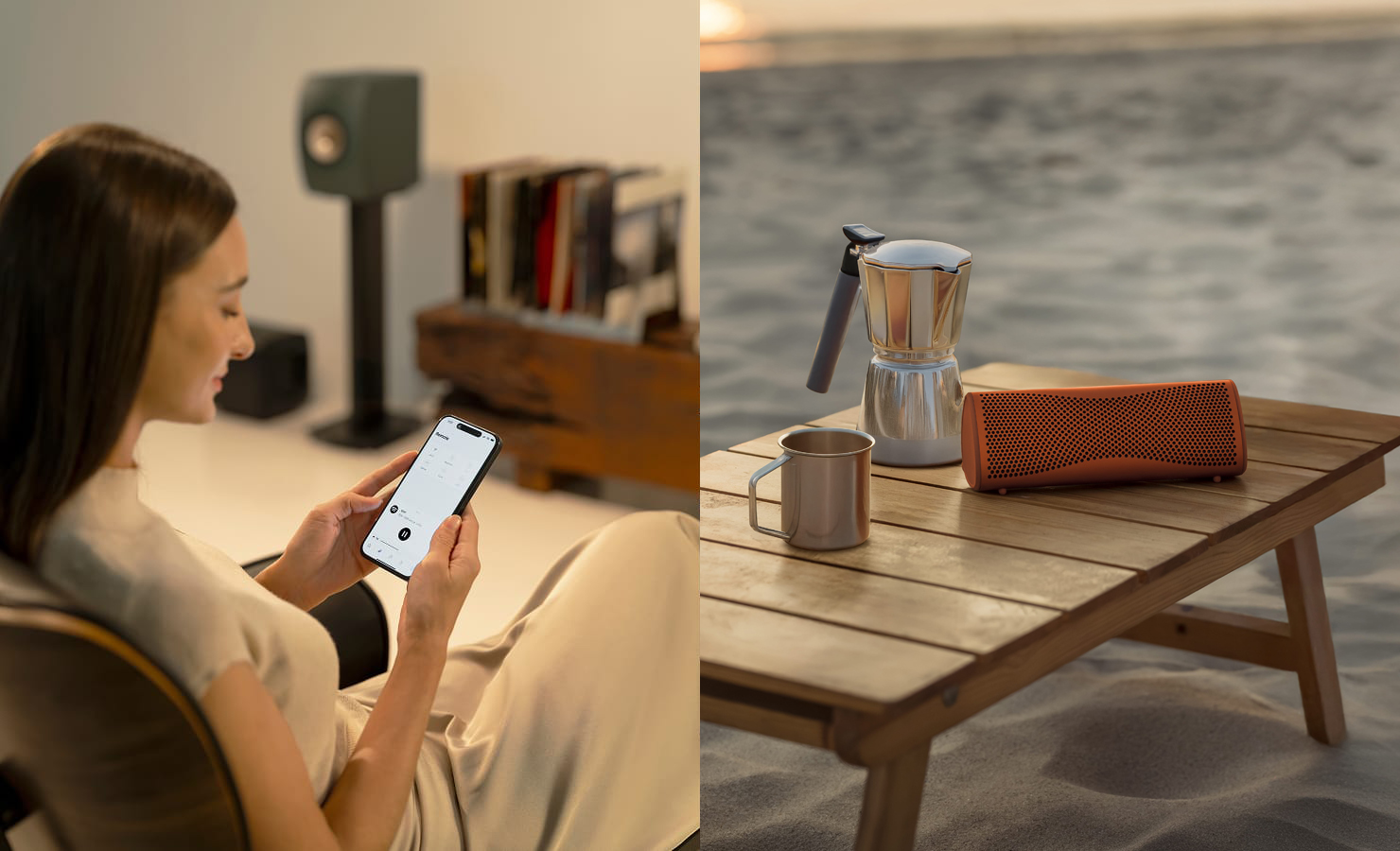
The foundation of any wireless technology dictates its capabilities. A Wi-Fi speaker is engineered to be an integral part of the home, connecting to your network to form a seamless, powerful audio architecture. It is a holistic system designed for an uncompromising in-home experience.
Bluetooth, in contrast, forges a quick point-to-point connection between your speaker and your chosen device, independent of any network. This purposeful design liberates the listening experience, allowing you to take high-fidelity sound far beyond the walls of your home.
Choosing the right wireless speaker can transform your home listening experience, turning everyday moments into extraordinary journeys. But with different technologies available, understanding the key differences is crucial. The debate between a WiFi speaker vs Bluetooth speaker isn't about which is better, but which is the right choice to unlock the sound you've been searching for.
As experts in high-fidelity audio, we've engineered systems that excel with both technologies. This guide cuts through the confusion, explaining the strengths of each connection, from uncompromised audio quality to ultimate portability.
Bluetooth, in contrast, forges a quick point-to-point connection between your speaker and your chosen device, independent of any network. This purposeful design liberates the listening experience, allowing you to take high-fidelity sound far beyond the walls of your home.
Choosing the right wireless speaker can transform your home listening experience, turning everyday moments into extraordinary journeys. But with different technologies available, understanding the key differences is crucial. The debate between a WiFi speaker vs Bluetooth speaker isn't about which is better, but which is the right choice to unlock the sound you've been searching for.
As experts in high-fidelity audio, we've engineered systems that excel with both technologies. This guide cuts through the confusion, explaining the strengths of each connection, from uncompromised audio quality to ultimate portability.
2. Which is Better for Sound Quality: WiFi Speaker vs Bluetooth Speaker?
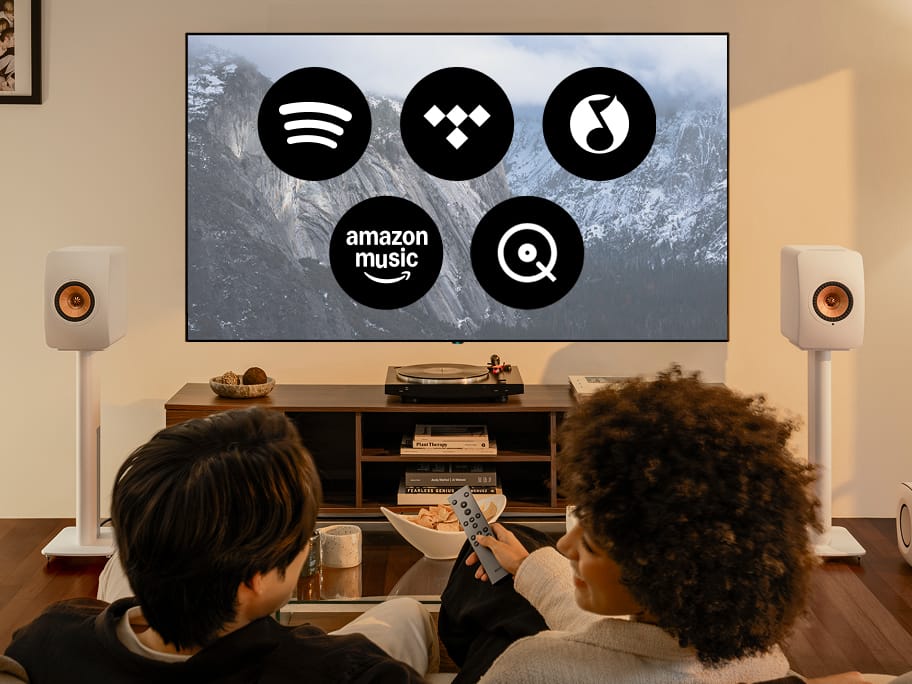
For the audiophile seeking an uncompromising connection to their music, a Wi-Fi-based system will always deliver the ultimate in sound quality. This is because a home Wi-Fi network has the capacity to stream true high-resolution audio. It allows for a bit-perfect transmission of data from platforms like Tidal Connect and Roon, ensuring every subtle nuance and intricate detail of the original master recording is delivered to the speaker, and ultimately, to you.
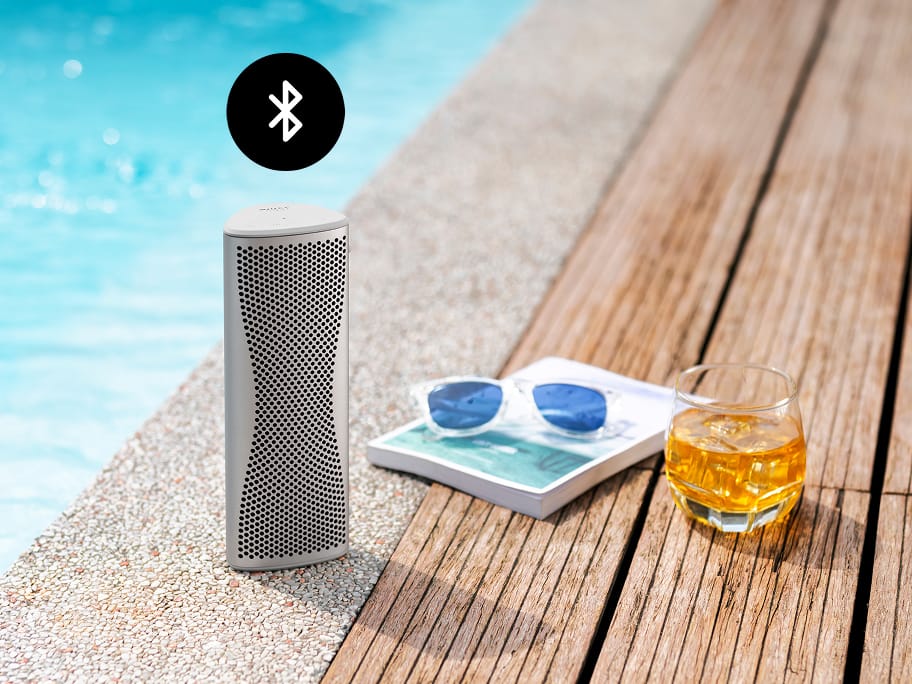
However, our passion for engineering means we believe convenience should never demand a major sacrifice in quality. We have meticulously engineered our Bluetooth implementations to be masterpieces of efficiency. By using advanced codecs like aptX™ Adaptive, we can deliver a rich, detailed, and dynamic performance that brings you incredibly close to the original sound, with the simple ease of a direct connection.
The choice, therefore, isn't simply about which is 'better', but which experience you desire in the moment: the absolute, uncompromised fidelity of Wi-Fi, or the spontaneous, high-quality enjoyment of Bluetooth.
However, our passion for engineering means we believe convenience should never demand a major sacrifice in quality. We have meticulously engineered our Bluetooth implementations to be masterpieces of efficiency. By using advanced codecs like aptX™ Adaptive, we can deliver a rich, detailed, and dynamic performance that brings you incredibly close to the original sound, with the simple ease of a direct connection.
The choice, therefore, isn't simply about which is 'better', but which experience you desire in the moment: the absolute, uncompromised fidelity of Wi-Fi, or the spontaneous, high-quality enjoyment of Bluetooth.
Wireless Speakers
Bluetooth Speakers
Performance
It allows for a bit-perfect transmission of data from platforms like Tidal Connect and Roon.
It can deliver a rich, detailed, and dynamic performance that brings you incredibly close to the original sound, with the simple ease of a direct connection.
3. Comparing Range, Stability, and Multi-Room Audio
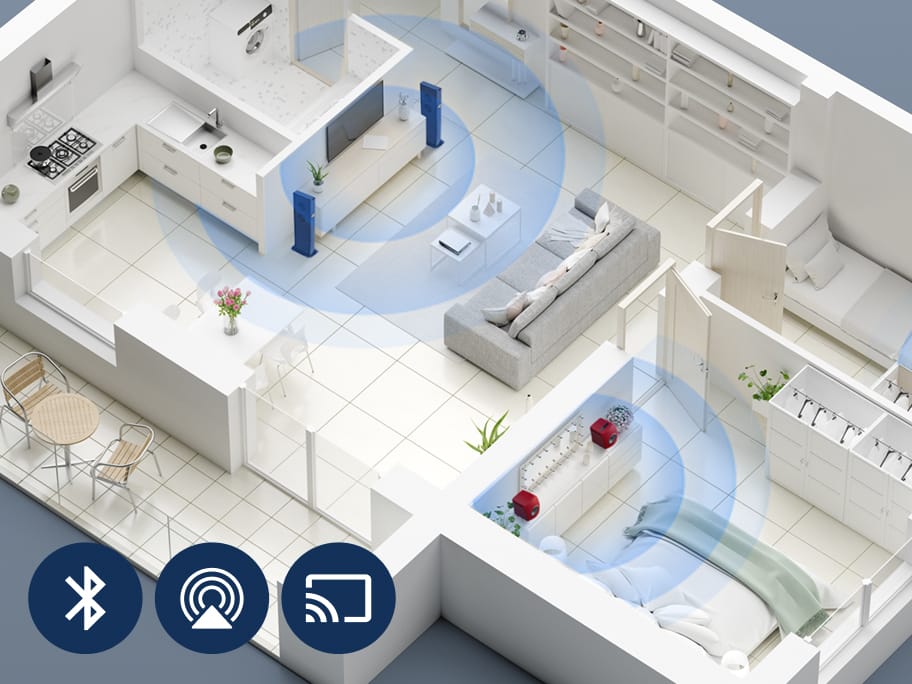
The network-based nature of Wi-Fi is the magic behind the modern multi-room audio system. Thanks to AirPlay 2, Chromecast or Roon wireless speakers can often communicate and synchronise perfectly. This allows you to group speakers to have the same song playing throughout the house for a party, or create separate zones for individual listening. A Wi-Fi connection is also as robust as your home network, allowing you to control your music from any room.
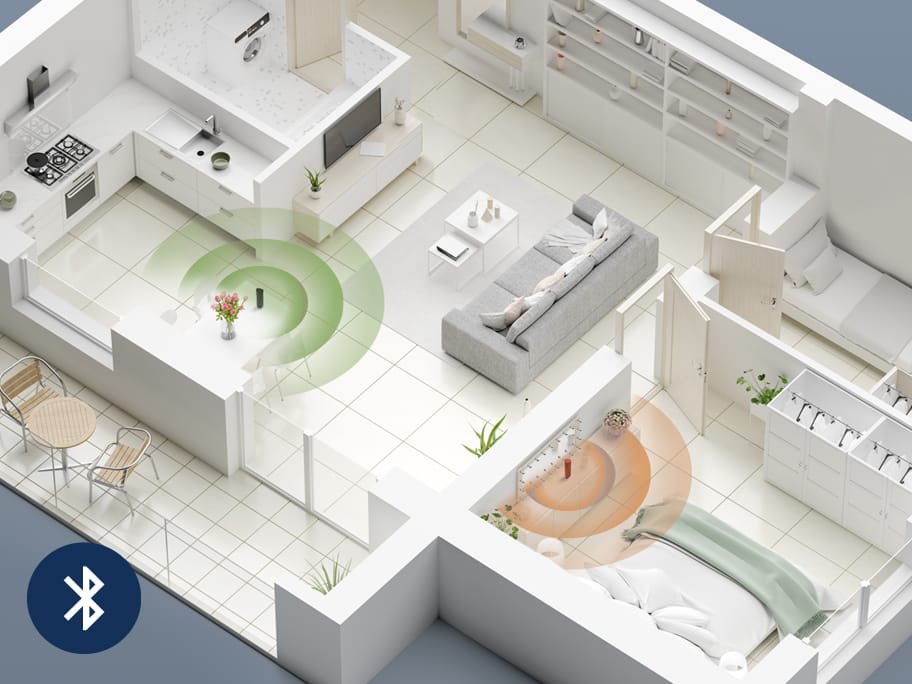
Bluetooth, conversely, excels at providing freedom from the home. Its simple, direct pairing and independence from any network make it the natural choice for portable speakers. The connection is more intimate, perfect for a single room and typically operating within a 10-metre range.
Bluetooth, conversely, excels at providing freedom from the home. Its simple, direct pairing and independence from any network make it the natural choice for portable speakers. The connection is more intimate, perfect for a single room and typically operating within a 10-metre range.
Wireless Speakers
Bluetooth Speakers
Connectivity
When partnered with other speakers from the LS Wireless Collection, you can use AirPlay 2 or Google Cast to fill the entire house with the same playlist.
It can deliver a rich, detailed, and dynamic performance that brings you incredibly close to the original sound, with the simple ease of a direct connection.
4. Understanding the Setup: Simplicity vs. Integration
The setup process for each technology reflects its core purpose. Bluetooth is the pinnacle of simplicity; a pairing process that takes mere seconds creates a direct link between your device and speaker, ready for instant playback. It is designed for immediate, spontaneous enjoyment.
A Wi-Fi speaker setup is a deliberate, one-time process of integration. Through an intuitive app like KEF Connect, you introduce the speaker to your home network. This initial step unlocks a world of potential, from high-resolution streaming to a fully synchronised multi-room system, making the speaker a permanent and powerful part of your home’s audio architecture.
A Wi-Fi speaker setup is a deliberate, one-time process of integration. Through an intuitive app like KEF Connect, you introduce the speaker to your home network. This initial step unlocks a world of potential, from high-resolution streaming to a fully synchronised multi-room system, making the speaker a permanent and powerful part of your home’s audio architecture.
5. Why Are Wireless HiFi Systems a Greater Investment?
It is crucial to understand that a KEF wireless Hi-Fi speaker is far more than its connection method. It is a complete, all-in-one acoustic system, born from our obsession with sonic perfection.
Within a single elegant form resides every component of a traditional Hi-Fi setup: bespoke amplification for each individual driver, advanced digital-to-analogue converters, and our proprietary Music Integrity Engine®. Each element is meticulously engineered to work in perfect harmony. In essence, you are investing in the performance of a full system of separates, beautifully integrated. Bluetooth is a vital feature, but it is one part of this much greater whole.
Within a single elegant form resides every component of a traditional Hi-Fi setup: bespoke amplification for each individual driver, advanced digital-to-analogue converters, and our proprietary Music Integrity Engine®. Each element is meticulously engineered to work in perfect harmony. In essence, you are investing in the performance of a full system of separates, beautifully integrated. Bluetooth is a vital feature, but it is one part of this much greater whole.

6. Introducing the new generation of Muo, KEF's Portable Speaker
Our philosophy has always been to deliver sound with absolute purity, regardless of form. This raises a compelling question: what happens when that obsession with high-fidelity is distilled into a design you can hold in your hand? Our answer is the new Muo, a portable speaker that reimagines what is possible beyond your home.
Muo is engineered to deliver a true KEF experience, a standard of quality that is unheard of in most portable speakers. Now in its new generation, it delivers powerful bass performance made possible by a large racetrack driver and our P-Flex Surround, a technology adapted directly from our flagship subwoofers. This acoustic excellence is governed by our Music Integrity Engine® (MIE), which uses bespoke algorithms borrowed from our LS60 Wireless speakers to ensure a stunningly clear, detailed, and accurate performance that far exceeds its compact size.
This uncompromising sound is housed within an iconic form. Designed by the visionary Ross Lovegrove, Muo's sculpted aluminium silhouette echoes our legendary Muon loudspeaker. This beauty is built for life, with up to 24 hours of playback and an IP67 waterproof and dustproof rating, ensuring it is ready for any adventure. Muo is the ultimate expression of portable audio, offering both convenience and an authentic connection to your music, wherever you are.
DISCOVER THE NEW MUO PORTABLE SPEAKER
Muo is engineered to deliver a true KEF experience, a standard of quality that is unheard of in most portable speakers. Now in its new generation, it delivers powerful bass performance made possible by a large racetrack driver and our P-Flex Surround, a technology adapted directly from our flagship subwoofers. This acoustic excellence is governed by our Music Integrity Engine® (MIE), which uses bespoke algorithms borrowed from our LS60 Wireless speakers to ensure a stunningly clear, detailed, and accurate performance that far exceeds its compact size.
This uncompromising sound is housed within an iconic form. Designed by the visionary Ross Lovegrove, Muo's sculpted aluminium silhouette echoes our legendary Muon loudspeaker. This beauty is built for life, with up to 24 hours of playback and an IP67 waterproof and dustproof rating, ensuring it is ready for any adventure. Muo is the ultimate expression of portable audio, offering both convenience and an authentic connection to your music, wherever you are.


